
Purchase the 2026 KLOW Blend Best 4-Peptide Stack.
View a trusted research-use source for the KLOW peptide blend , GHK-Cu, BPC-157, TB-500, KPV,. I agree where to buy MOTS-c that products and information on this website are provided for laboratory research use only and are not intended for use in or on humans or animals. When combined (they create a coordinated regenerative signal that promotes healing across skin), muscle, connective tissue, gut lining, and vascular systems. For the other compounds, the general peptide calculator covers the same arithmetic. There are no clinical photos (no measured timeline and no controlled comparison for the combination of BPC-157), TB-500, GHK-Cu and KPV.
GHK-Cu dominates the blend at 62.5% because it requires higher doses to achieve its collagen-stimulating effects, while the other three are active at lower concentrations. This content is for educational purposes only and is not intended as medical advice. No standardized human dose (frequency), cycle length, or maintenance regimen has been established for the combined KLOW blend.
You can use a peptide dose calculator to convert mg into exact syringe units quickly and accurately. Some users report reduced stiffness and improved mobility over time. By continuing (you agree not to share or redistribute this website), its links, or any of its content. See Topical Administration for a list of compatible/synergistic ingredients in skincare products. Injection site reactions , ISR’s, may include redness, swelling, bruising, pain, development of a knot beneath the skin which may last for several days. Loading phase , 5x/week, for 4 weeks, then maintenance (3x/week) for the remaining weeks.
Individual peptides give more control over exact doses and injection sites. Community protocols document adding 2 mL of bacteriostatic water to the 70mg vial — yielding 35 mg/mL. Community protocols describe gentle swirling, not shaking — to avoid degradation, with storage at 2–8°C and use within 28 days. For protocol-focused research (including dosing schedules), reconstitution math, and cycle structure, Peptide Advisors does not publish protocols.
Bioavailable curcumin, anti-inflammatory layer that pairs with healing-stack protocols. BD Ultra-Fine 31G 0.3cc insulin syringes, each gradation marks 1 unit, for accurate sub-50-unit the Klow blend doses. Hand-picked storage, injection, and recovery supplies paired with Klow Blend protocols. GHK-Cu’s collagen remodeling becomes visible by weeks 4-8.
If you are 3 weeks in and noticing nothing, check your source quality before assuming the blend is not working. Most people start seeing the “glow” around weeks 4 to 6, with peak skin improvements at 8 to 12 weeks. During the first 1 to 2 weeks, the anti-inflammatory effects kick in first. TB-500 benefits from a loading phase, so the first 2 weeks at daily dosing followed by 3x/week maintenance is a reasonable protocol.
Vendor and community practices commonly involve cycling at doses of 4-6 weeks on and 2-4 weeks off, but there is no research to support this approach. Generally — a cycle spans from 4 to 8 weeks and is succeeded by an equal duration of rest. An 80mg vial (when used at standard research doses), typically lasts for approximately 3 to 4 weeks. Most protocols suggest an on period of 4-6 weeks, followed by a rest period of 2-4 weeks. Due to the rapid action of NF-kB inhibition — the KPV component usually yields noticeable effects within days rather than weeks.
Most protocols start at 2 mg of blend a day and build to 4 to 6 mg. There has been no research to quantify it — and the specific ingredient responsible remains unknown. The quantities listed below are frequently reported by online protocols and users. There is no established dose for KLOW, as no studies have evaluated it in humans.

Individual components , BPC-157, GHK-Cu, KPV, TB-500, each have preclinical rationale supporting their combined use for tissue repair and inflammation. A first-in-human Phase I study of IV recombinant thymosin beta-4 in healthy Chinese volunteers , 54 single-dose, 30 multiple-dose, established basic tolerability . An earlier study there tied faster tendon outgrowth to FAK-paxillin signaling in rat tendon fibroblasts . Pickart’s work identified at least 4,000 human genes that GHK-Cu raises or lowers, including antioxidant enzymes like superoxide dismutase. The typical community protocol runs 2000mcg total blend per day for 10 weeks, followed by 4 weeks off. That said, the individual ingredient data is real.
WADA’s list names thymosin beta-4 and its derivatives (including TB-500), as banned. In sports — BPC-157 is prohibited at all times as an unapproved substance. No one has published a study of KLOW itself.
Whether that division survives contact with real pharmacology is unproven, but it is the reason people give for running both rather than picking one. BPC-157 and TB-500 are both prohibited by WADA at all times — in and out of competition, under S0 (non-approved substances). There is no study of an injected four-peptide blend on hair growth in humans, and the leap from „copper peptides appear in shampoos“ to „KLOW regrows hair“ is not supported. The reports nonetheless describe gut comfort as one of the earliest changes noticed, often inside one to two weeks. For how the individual compounds compare, see our guide to peptides for injury recovery.
Systemic side effects reported in the first days include mild headache, flushing, transient fatigue and occasional nausea. Likewise (GHK’s gene-expression breadth invites lifespan claims), yet no lifespan study of GHK, GHK-Cu or KLOW exists in any species. No KLOW study has ever reported outcomes by sex — because no KLOW study exists.
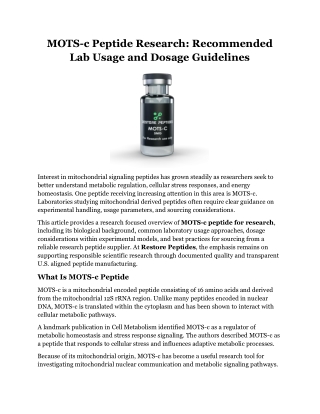
Displayed here is the Klow Dosage Chart, which outlines the titration schedule and the breakdown of components per injection for the klow peptide blend (GHK-Cu, KPV, BPC-157, and TB-500), including precise syringe units for the standard reconstitution of 80 mg. The majority of TB-500 products contain the short LKKTETQ sequence (residues 17 to 23), which facilitates actin binding and cellular migration, leading to its marketing for repair of tendons, muscles, and wounds. Protocols typically recommend administration in a fasted state focusing on gut endpoints, as well as in the evening targeting dermatological endpoints. Always utilize bacteriostatic water (BAC).